New Bedford Multi-Family Lead Paint Law and the 90-Day Rule
August 20, 2026
August 20, 2026
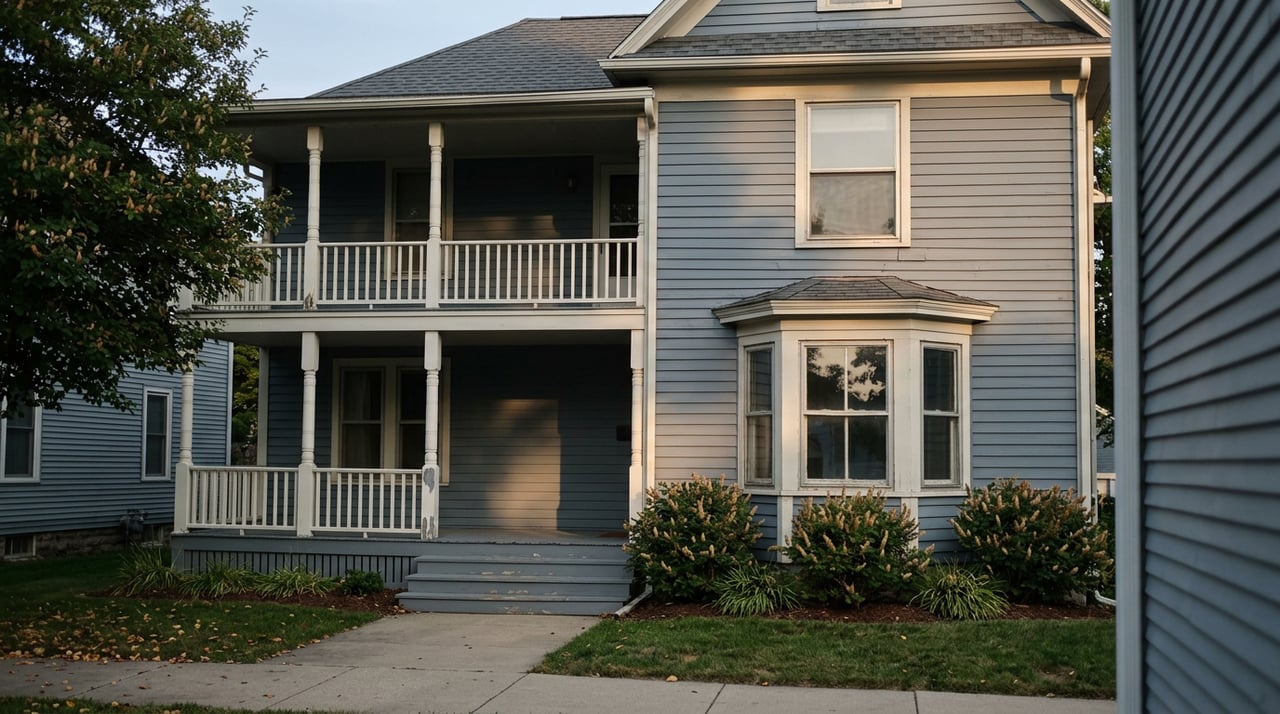
You walk through a three-family on Weld Street with your inspector, your financing is lined up, and the seller's disclosure says "no knowledge of lead paint." The building was put up before 1940. Two of the three units are occupied. You sign the purchase and sale agreement feeling like you did your homework.
What most buyers don't realize is that a clock started the moment they closed, and it has nothing to do with permits or the roof. It has to do with the tenants who were living there before you showed up.
Massachusetts treats lead paint differently than almost anywhere else, and the difference matters most in cities like New Bedford where the housing stock skews old. Under the state's Lead Law, a new owner of a multi-family building doesn't just buy the property. They buy responsibility for every tenant who was living there before the sale, including exposure that happened years earlier under a previous landlord.
There's a narrow window to limit that exposure. If a new owner begins deleading within 90 days of taking title, they can clear their liability for tenants who lived in the unit prior to their ownership. Miss that window, and a tenant who moved out a decade ago could still bring a claim against the current owner if a child was poisoned while living there. The rule sits in Massachusetts General Laws Chapter 111, Section 197, with the deleading procedures spelled out in 105 CMR 460.
This is the part that catches buyers off guard. The 90-day countdown isn't something you negotiate at closing. It starts running whether or not you've scheduled an inspection, whether or not you've budgeted for it, and whether or not you knew it existed.
Sellers in Massachusetts are required to disclose known lead hazards before a sale, under both state law and the federal Lead-Based Paint Disclosure Rule that has applied to pre-1978 housing since the rule was created. But "no known lead paint" on a disclosure form is a statement about what the seller happens to know, not a finding from an inspector. A seller who never tested the walls can honestly write "no known lead" on a building that still contains lead paint under three layers of Kilz.
The distinction matters more in New Bedford than in most Massachusetts cities. The city's housing stock leans heavily toward pre-World War II construction, which puts a large share of its triple-deckers and two-and three-family conversions squarely inside the pre-1978 window where the Lead Law applies. A disclosure saying "unknown" isn't a red flag exactly, but it isn't a green light either. The only way to know a unit's real status is a lead inspection performed by a licensed inspector, which produces either a full compliance letter or a list of the specific surfaces that need to be covered or removed.
Buying a pre-1978 multi-family in New Bedford means buying the building's lead history along with its rent roll. The paperwork rarely spells that out. The statute does.
Deleading a three-family isn't cheap, but New Bedford runs two programs through its Office of Housing and Community Development that change the math for buyers willing to ask about them before they sign, not after.
Neither program is something a buyer discovers by browsing listing photos. Both require an application through the city, and both assume the buyer already knows the unit's lead status going in. That's the ordering problem: the programs exist to help pay for deleading, but you need a lead inspection report before you can apply for either one, and the 90-day liability clock doesn't pause while paperwork moves through the city.
The market context makes this more than a theoretical concern. New Bedford's multi-family inventory this year has ranged from roughly $380,000 to $1.6 million, with listings averaging about 33 days on the market as of June 2026. That's a wide enough spread that a buyer at the lower end of the range is often looking at exactly the kind of building where lead status is unresolved, because sellers of higher-priced, recently renovated multi-families have usually already been through deleading as part of the renovation.
It also shows up in how sellers market compliance. A four-family near Brooklawn Park listed this year included in its remarks that all units were lead certified, framed explicitly as a selling point that supported the asking rents. That's not incidental language. In a market where a meaningful share of triple-deckers and two-families still carry unresolved lead status, a certified building is worth calling out, and an uncertified one is worth pricing accordingly.
None of this means walking away from older multi-family stock in New Bedford. It means treating the lead question as part of the deal structure instead of an afterthought.
A few things worth doing before you're under contract rather than after:
Ask for the lead inspection report during due diligence, not as a post-closing task. If one doesn't exist, budget the cost of getting one into your offer, and factor the 90-day clock into your closing timeline so the countdown doesn't start before you've had a chance to schedule the work.
MassLandlords explains that Massachusetts law doesn't allow a landlord to decline a family with young children because a unit hasn't been deleaded.
Talk to a licensed deleading contractor about realistic costs for the building's size and layout before you finalize your offer price. A seller credit negotiated at the table is a far better position than discovering the cost after you already own the liability.
And loop in an attorney familiar with Massachusetts landlord-tenant law before you sign anything. The Lead Law's inherited-tenant provision is a statute with real financial teeth, and the 90-day window is not something to interpret on your own.
If you're comparing this to the general condition of a triple-decker, our guide to what a triple-decker actually is in New Bedford covers the broader inspection picture. This piece is about the one clause in state law that doesn't show up on a standard inspection checklist.
Does the 90-day rule apply if I plan to live in one unit myself? Yes. The inherited-tenant liability under the Lead Law applies to owner-occupants as well as investors. The city's two deleading programs treat owner-occupied and investor-owned units somewhat differently in terms of income requirements, but the underlying 90-day clock for limiting liability applies regardless of who lives in the building.
What if the seller already deleaded some units but not others? It's common in triple-deckers for one or two units to have been updated over the years while another was never touched. A lead inspection report will show unit-by-unit status, which matters both for your liability calculation and for which units might qualify for city grant funding.
Can I ask the seller to delead before closing instead of dealing with it myself? You can, and it's a reasonable point to raise during negotiation, though sellers often prefer to sell as-is and adjust price rather than take on the work themselves. Either approach can work. What matters is that the decision gets made explicitly, in writing, before closing, rather than left as an assumption.
Buying or selling a multi-family in New Bedford involves more moving pieces than a single-family purchase, and the lead question is one that's easy to miss until it's expensive. If you're weighing a triple-decker or thinking through the numbers on a listing that's caught your eye, Luis Rodrigues can walk through the specifics with you in English, Spanish, or Portuguese. Schedule a free consultation and get a clear read on what a property actually requires before you're the one holding the clock.
This article is general information, not legal, tax or financial advice. Consult a qualified professional about your situation.






Luis is here to help you throughout your entire home buying and selling process. Trying to do it all on your own can be burdensome. He will find you homes within your price range, help you find buyers, assist you with paperwork, and more.