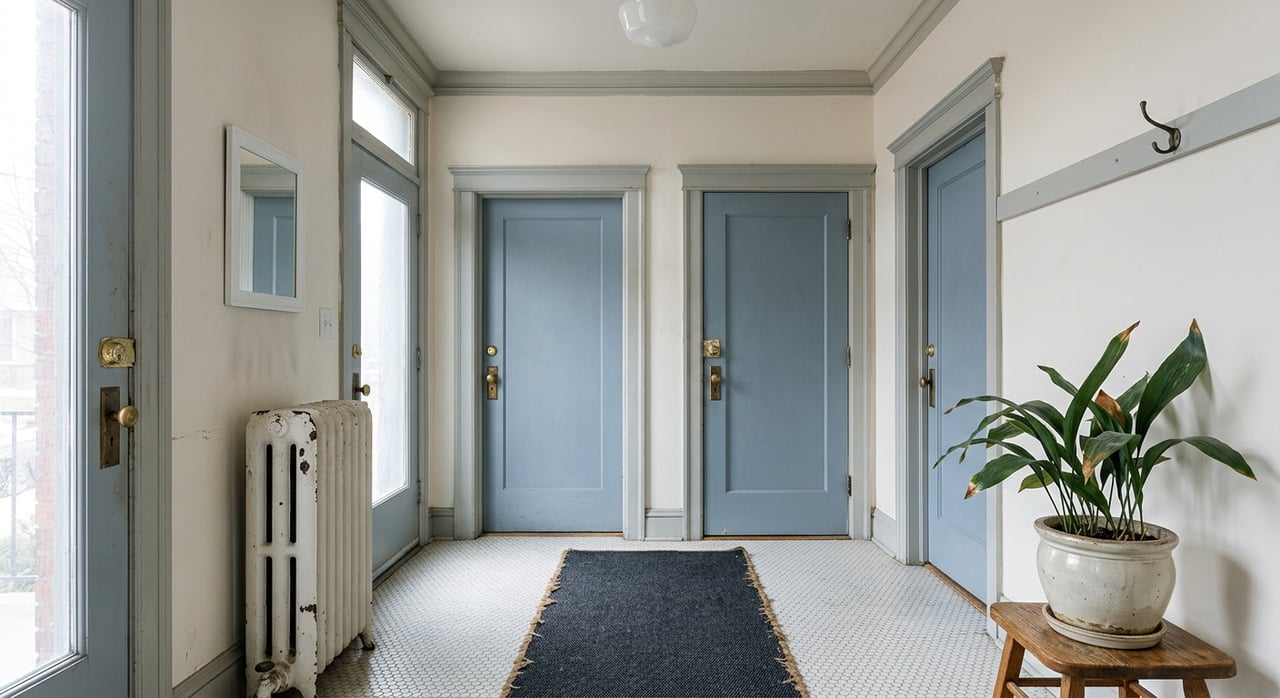
Providence Condo vs Multi Family for Your First Home
July 2, 2026
July 2, 2026
If you are buying your first home in Providence, one question can shape your budget, lifestyle, and stress level fast: should you buy a condo or a small multi-family? In a city where homes move quickly and competition stays strong, that choice is not just about price. It is about which kind of monthly responsibility fits your life better. Let’s break down how each option works in Providence so you can make a smarter first move.
Providence is a very competitive market. Redfin reports homes receive about four offers on average and sell in around 32 days, which means first-time buyers often need to move with a clear plan.
That fast pace matters whether you are looking at a condo or a multi-family. As of late June 2026, Zillow showed 45 active condo listings in Providence, while duplex and triplex inventory was much larger at about 120 active listings, and Redfin reported 125 multi-family homes for sale.
The price ranges are also very different. Visible condo listings mostly clustered from the high $200,000s to the low $500,000s, while many multi-family listings sat in the mid-$500,000s to $700,000s, with some lower-priced and higher-priced outliers.
A condo can be the simpler path into homeownership. You own your individual unit, while common areas and building-level maintenance are shared through the condo association.
For many first-time buyers, that means fewer day-to-day maintenance demands. Instead of handling every exterior repair or building issue yourself, the association typically manages those shared responsibilities.
That lower-maintenance setup can be especially attractive in Providence. Redfin gives the city a Walk Score of 76, so many buyers are drawn to condos for a more walkable, urban lifestyle with less property upkeep.
The biggest mistake many first-time buyers make with condos is focusing only on the purchase price. Condo or HOA dues are usually separate from your mortgage, and those fees can range from a few hundred dollars a month to more than $1,000.
That means a condo that looks affordable at first glance may carry a higher monthly payment than expected. When you compare properties, you need to look at the full housing cost, not just principal and interest.
A condo can simplify maintenance, but it also limits control. You are buying into a shared community structure, which means the association may set rules about building use, upkeep, and other ownership details.
You may also face special assessments. Those are extra costs that can come up if the building needs major work and the association does not have enough funds set aside.
Condo financing is not always as simple as financing a single-family home. FHA condo financing depends not just on you as the buyer, but also on the condo project itself.
The project must be FHA-approved or qualify under Single-Unit Approval rules. Lenders may also review the association’s insurance coverage, financial condition, title issues, pending legal action, and physical condition.
In practice, that means a Providence condo may look like a strong value on paper but still hit financing friction. A unit’s affordability is only part of the story.
A small multi-family offers something a condo usually cannot: income potential. If you buy a two- to four-unit property and live in one unit, you may be able to use rent from the other unit or units to help offset your housing costs.
That is the core appeal for many first-time buyers in Providence. Instead of paying for housing with your income alone, you may be able to reduce the monthly burden through rental income.
HUD says FHA financing is available on one- to four-unit properties, with down payments as low as 3.5% of the purchase price. That can make a small multi-family more realistic for some buyers than they expect.
For three- and four-unit properties, there is an added layer. HUD’s Handbook 4000.1 includes a self-sufficiency rental-income test, so the building’s rent potential can matter to underwriting as well as to your own budget.
That does not mean every deal works. It does mean the numbers matter from the start, especially if you are counting on rental income to make the purchase comfortable.
Recent rent trackers put average Providence rent at about $2,100 to $2,187 per month. Two-bedroom averages were around $2,150 to $2,175 per month.
Those figures do not guarantee a profitable property. Still, they help explain why many first-time buyers seriously consider a small multi-family instead of a condo.
The tradeoff is simple: more income potential usually means more work. Providence’s housing code places responsibility for minimum health and safety standards on owners, operators, and or occupants of residential structures.
For a first-time buyer, that means a small multi-family is not just a home. It is also a property you will need to maintain at the building level, which may include repairs, inspections, and tenant-related issues.
If you like being hands-on and you want more control, that may feel like an advantage. If you want a simpler first step into ownership, it may feel like too much too soon.
The better choice usually comes down to the kind of burden you are more comfortable carrying each month. With a condo, that burden is often HOA dues and association rules. With a multi-family, it is property upkeep and owner responsibility.
Here is a simple side-by-side view:
| Factor | Condo | Small Multi-Family |
|---|---|---|
| Typical entry price | Often lower | Often higher |
| Maintenance load | Lower day to day | Higher day to day |
| Monthly extras | HOA or condo dues | Repair and upkeep costs |
| Income potential | Usually none | Rental income potential |
| Control | Less control over shared building decisions | More direct control |
| Financing complexity | Project-level review may matter | Rental-income review may matter |
| Best fit | Buyer who wants simplicity | Buyer who wants income potential |
In Providence, property classification can affect your tax picture. The city classifies residential real estate with fewer than six dwelling units as Class 1A, and eligible natural persons may qualify for a homestead or owner-occupied rate.
That can matter for both a condo and a small multi-family if you plan to live in the property. The filing deadline for the owner-occupied homestead benefit is March 15, and the exemption attaches to the owner rather than the property.
For a first-time buyer, this is an important reminder. The true monthly cost of ownership is not just mortgage plus insurance. Taxes and owner-occupancy status matter too.
If you are concerned about cash needed to close, Rhode Island programs may help. RIHousing lists a $15,000 zero-percent down payment and closing-cost loan through 15kDPA, up to $25,000 for first-generation buyers through FirstGenHomeRI, and up to $20,000 in Extra Assistance.
RIHousing also says first-time homebuyers must complete homebuyer education before closing on a RIHousing loan. Its First-time Homebuyer Loan also advertises up to 100% financing.
That support can be useful whether you lean toward a condo or a small multi-family. The key is to match the assistance program with a property type and monthly payment you can realistically manage.
A condo is often the better fit if you want simpler ownership, fewer maintenance demands, and a more predictable lifestyle. Even if the HOA fee feels high, some buyers prefer that tradeoff because it reduces surprise responsibilities.
A small multi-family is often the better fit if you want to build equity with rental income and you are comfortable taking on more responsibility. For some Providence buyers, that first purchase can serve as both a home and a long-term wealth-building step.
Neither option is automatically better. The right answer depends on your budget, your tolerance for hands-on ownership, and how you want your first home to work for you.
If you are comparing condo fees against rental income potential, you are asking the right question. In Providence, that is often the real decision.
If you want help sorting through Providence condos, 2-4 unit properties, financing options, and the numbers behind each path, Luis Rodrigues can help you make a clear, confident first-home plan.


Luis is here to help you throughout your entire home buying and selling process. Trying to do it all on your own can be burdensome. He will find you homes within your price range, help you find buyers, assist you with paperwork, and more.