Fall River Multi-Family Market 2026 Is Splitting in Two
August 13, 2026
August 13, 2026
How does a market get more expensive and slower at the same time? That's the question sitting inside Fall River's multi-family numbers right now, and it's the kind of question that matters if you're the one writing an offer.
Over the past five years, through data reported for the period ending June 30, 2026, the median multi-family sale price in Fall River climbed from $475,000 to $655,000. That's a five-year run most owners would be happy to see on paper. But look at what happened in just the last twelve months, comparing 2025 to 2026: median days on market rose from 47 to 58, median days to receive an offer stretched from 29 to 40, active multi-family inventory grew from 22 to 32 units, and months of supply ticked up from 3.22 to 3.28.
Rising price. Slower pace. More homes sitting on the market longer. Those three things don't usually show up together, and when they do, it's worth asking why instead of just reading the median and moving on.
A single median number assumes every multi-family in Fall River is competing in the same race. It isn't. What's actually happening is that the city's multi-family stock has split into two distinct pools, and the median is a snapshot of two very different stories.
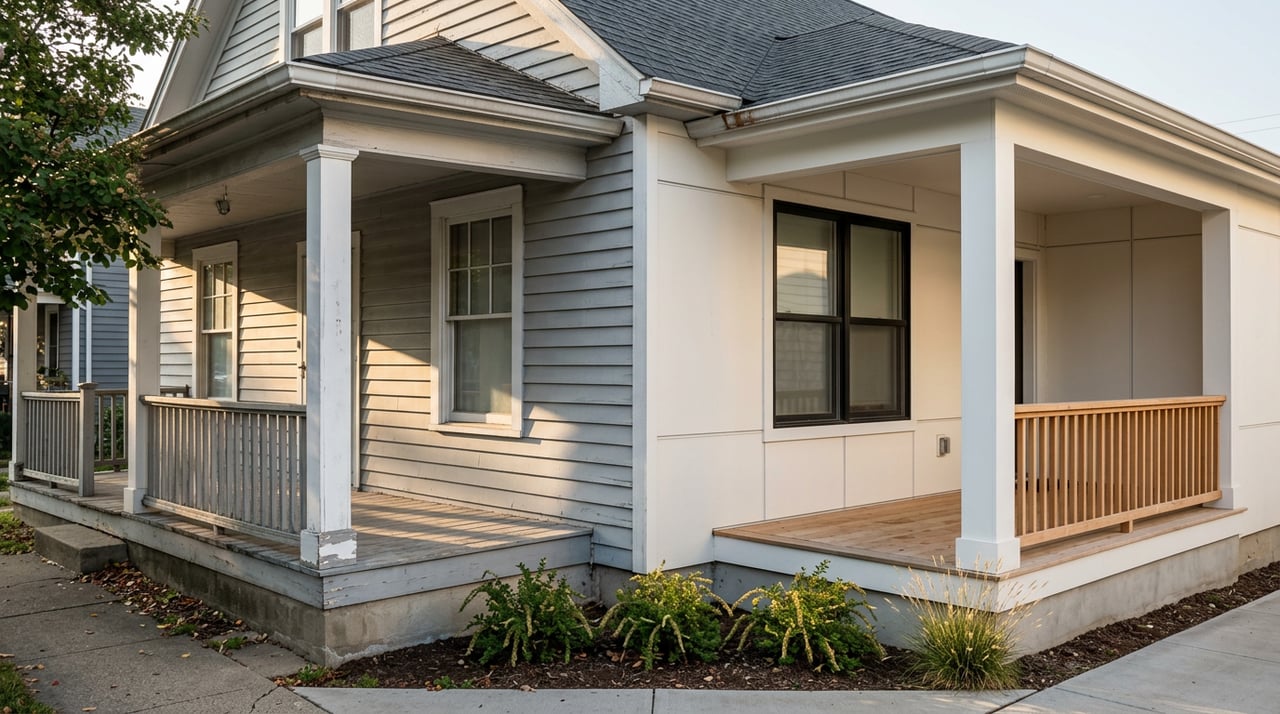
In one pool are properties that show up on the market already finished: new kitchens, new baths, new electrical and plumbing, a new roof, delivered vacant or with a clean rent roll in place. These sell fast, often to buyers who want to close and start collecting rent without a punch list. In the other pool are properties marketed as needing work, buildings where the description points to "TLC" or "potential" rather than move-in condition. These sit. They sit because the buyer pool for a project property is smaller than the buyer pool for a turnkey one, and because that buyer pool is doing its own math on rehab costs before it ever gets to the offer stage.
When the finished properties keep selling quickly at higher prices, they pull the median up. When the unfinished properties pile up on the sidelines, they pull the median days-on-market up too. Both things are true at once, and neither one is the whole picture.
Part of why that split has gotten sharper this year traces back to a single date: March 24, 2026, when South Coast Rail began commuter service connecting Fall River to Boston, along with stops in Freetown, New Bedford, Middleboro, and Taunton. For a city that hasn't had a direct passenger rail connection to Boston since the 1950s, that's not a minor amenity. It's a change in what a Fall River address means to a certain kind of buyer.
A renovated multi-family within walking distance of the new Fall River Depot station is now being marketed and priced differently than one ten minutes away by car. That distinction didn't exist as clearly a year ago. It's a reasonable piece of why the top end of the renovated pool has been able to command higher prices and still move quickly, while everything outside that radius competes on more traditional terms: condition, price per unit, and how much work a buyer is willing to take on.
The rail line isn't the only signal telling buyers that Fall River's map is being redrawn. In July 2026, MassDOT opened bidding on roughly 20 acres of former highway land along the Taunton River, known as the Davol Street Corridor, seeking developers to turn the site into a mixed-use neighborhood adjacent to the new commuter rail stop. Proposals are due October 21, 2026.
Fall River Mayor Paul E. Coogan called it a turning point for the city, saying the future development of these waterfront parcels will bring close to $1 billion of investment and open many new economic opportunities for Fall River. That's not a small claim from a sitting mayor, and it's the kind of statement that shapes how investors read a listing near the waterfront even before a single shovel goes into the ground.
The land itself was only freed up because MassDOT spent three years tearing down an obsolete elevated highway that had cut the downtown off from its own riverfront, replacing it with a street grid that can actually support housing and storefronts. That kind of groundwork takes years to notice and then suddenly explains a lot about why buyer confidence in certain corridors has shifted.
The bifurcation isn't only about location relative to rail and waterfront. It's also about what "renovated" has come to mean in a city built on mill architecture. Commonwealth Landing, a former mill building, has been converted into more than 100 residential units while keeping commercial and retail space on site. Projects like this are changing what buyers expect a finished Fall River property to look like, and they're adding supply at the upper end of the renovated pool exactly as older triple-deckers and two-families without updates are struggling to find buyers at 2021-era pricing.
For an investor comparing Fall River against New Bedford or Taunton, the split matters more than the median. A four-unit mixed-use property currently on the market, combining residential apartments with ground-floor commercial space, was recently listed with gross scheduled income of about $102,000 a year and an estimated cap rate approaching 9 percent at asking price. A renovated two-family in the South End was showing one unit rented at $1,700 a month. A separately listed two-family with two 2-bedroom units was generating $3,500 a month in gross rent. None of these numbers are the market. They're data points showing what a well-positioned, correctly priced property is actually producing right now, which is the number you should be underwriting to, not the citywide median.
There's a cross-border piece worth flagging too. Bristol County's effective property tax rate sits around 1.11 percent, matching New Bedford and Taunton and coming in noticeably lower than Providence, Rhode Island's 1.37 percent. If you're comparing a Fall River duplex against a similar property across the state line, that gap belongs in your holding-cost math from day one, not as an afterthought during closing.
Here's the practical friction this creates. When you see a multi-family that's been sitting for 58 or 70 days, don't assume the seller is desperate or the price will fall. Ask which pool it's in. A dated property with no updates sitting for two months might just be waiting for a buyer willing to take on the rehab, and the eventual sale price could still land close to the original ask if the bones are good. A renovated, well-located property sitting that long is a different signal entirely, and it's worth asking your agent to dig into why: overpricing relative to comparable renovated sales, an issue that surfaced at inspection, or something specific to the unit mix or parking that's narrowing the buyer pool.
The number alone doesn't tell you which situation you're looking at. The condition, the location relative to the rail stop and the waterfront corridor, and the seller's actual motivation do.
Does a higher median days-on-market figure mean Fall River multi-family prices are about to drop? Not on its own. The current 2025-to-2026 increase in median days on market is happening at the same time the five-year median price has climbed, which points to more supply and a wider range of property conditions entering the market rather than falling demand. Watch the price trend for renovated, rail-adjacent properties specifically. That's the segment likely to hold value even if the citywide median days on market rises further.
Is Fall River more tax-friendly than Providence for multi-family investors? On paper, yes. Bristol County's effective property tax rate of roughly 1.11 percent is lower than Providence's 1.37 percent, which is a meaningful difference on a multi-unit building held for cash flow. It shouldn't be the only factor in a cross-border comparison, but it belongs in the spreadsheet.
If you're trying to figure out whether a specific Fall River multi-family is priced against the renovated tier or the original-condition tier, that's exactly the kind of read that benefits from someone who's underwritten both kinds of deals in this market. Luis Rodrigues works across southeastern Massachusetts and Rhode Island with a focus on multi-family and investor transactions, in English, Spanish, and Portuguese. Schedule a free consultation to run the numbers on a specific address before you write the offer.
This article is general information, not legal, tax or financial advice. Consult a qualified professional about your situation.


Luis is here to help you throughout your entire home buying and selling process. Trying to do it all on your own can be burdensome. He will find you homes within your price range, help you find buyers, assist you with paperwork, and more.