Trying to decide whether a condo or a 2–4 unit building in Brockton fits your budget? You’re not alone. Many buyers here want lower monthly costs and a path to build equity while keeping risk in check. In this guide, you’ll learn how to compare total cost of ownership, understand financing differences, and run simple worksheets that show your bottom line. Let’s dive in.
Brockton market context and how to get live numbers
Brockton is an older, built-out city within commuting distance to Boston and Providence. It often offers lower entry prices than many core Greater Boston suburbs, which is why both first-time buyers and small investors look here.
You should base your decision on current, local numbers. Here’s where to pull them:
- Recent sales and comps: Ask for a local MLS comparative market analysis (CMA) for condos and 2–4 units in your target neighborhoods.
- Current rents: Review rent surveys from local property managers and major rental platforms. Cross-check at least two sources for a realistic average.
- Property taxes and assessed values: Check the City of Brockton Assessor’s Office for property data and tax details. Use the official Assessor page to verify valuations and rates.
- Condo documents: Request the master deed, bylaws, budget, insurance certificates, and any reserve study from the condo association or manager.
- Lender quotes: Get preapproval for both a condo and a 2–4 unit so you can compare rates, down payment, and mortgage insurance.
Helpful starting points:
What drives total cost of ownership
Comparing a condo to a 2–4 unit is about the full monthly picture, not just the list price. Build your budget using these components.
- Acquisition costs: purchase price, down payment, closing costs (lender fees, attorney, recording), and points if any.
- Financing: interest rate, loan program, and mortgage insurance (PMI on many conventional loans under 20% down; FHA requires upfront and annual MIP).
- Recurring ownership costs:
- Mortgage principal and interest
- Property taxes
- Insurance (HO-6 plus liability for condos; landlord or DP3-type policies for multi-family)
- HOA/condo fees for condos (often cover exterior, common insurance, grounds, snow, reserves, and sometimes utilities)
- Repairs and maintenance (multi-family owners carry most exterior and unit-level work)
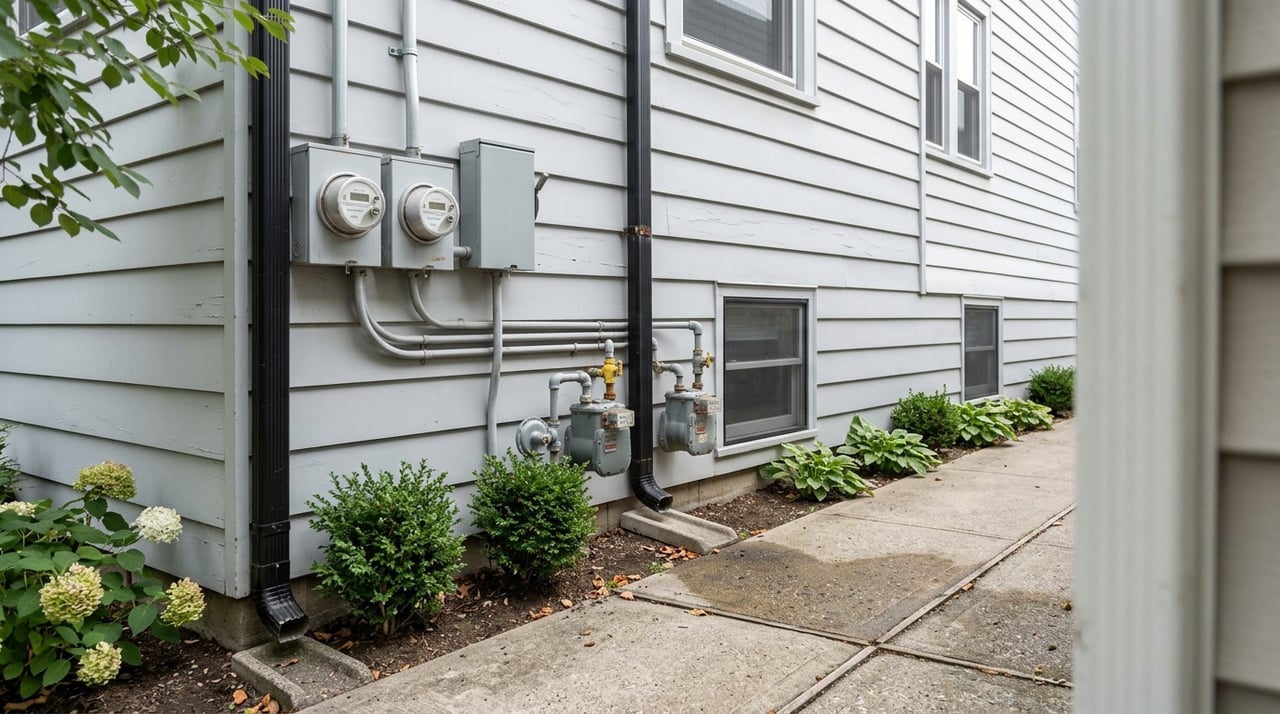
- Utilities ownership vs tenant-paid
- Vacancy, turnover, and management fees if you hire a manager
- Capital reserves for big items like roof, siding, or heating systems
- One-time and variable items: condo special assessments, rental unit rehab costs, and lead paint remediation on pre-1978 buildings.
Simple worksheets you can use
Use these templates with live Brockton numbers to compare monthly costs.
Template A — Condo
- Purchase price = $P
- Down payment = D% (cash at closing ≈ P × D% + closing costs)
- Monthly mortgage = M
- Monthly condo fee = F
- Monthly taxes + insurance = T
- Monthly net cost = M + F + T
Template B — 2-unit owner-occupied
- Purchase price = $P2
- Down payment = D2% (cash at closing ≈ P2 × D2% + closing costs)
- Monthly mortgage = M2
- Expected monthly rent (other unit) = R
- Monthly taxes + insurance + maintenance = T2
- Monthly net cost = M2 + T2 − R
To evaluate investment performance on a 2–4 unit, add simple metrics:
- Monthly cash flow = Gross rent − vacancy allowance − operating expenses − mortgage payment
- Cash-on-cash return = Annual net cash flow ÷ total cash invested at closing
- Cap rate (for a fully rented 2–4 unit) = Net operating income ÷ purchase price
- GRM = Purchase price ÷ annual gross rent
Break-even and sensitivity checks
Run two quick tests before you commit.
- Break-even rent: Solve for the rent you need so that M2 + T2 − R = your target monthly cost. If you want neutral cash flow, set the target to zero and solve for R, then compare to current rent comps.
- Sensitivity checks: Change condo HOA fee by plus or minus 25% and rent by plus or minus 10% to see how your monthly net cost moves. This shows how assessments, vacancies, or slight market shifts affect your budget.
Financing paths: condo vs 2–4 unit
Financing often decides what fits your budget. Here are common pathways to review with your lender.
Condos
- Eligible loan types: conventional, FHA, and VA (if eligible).
- Project approval: Many programs want the condo association to meet documentation standards like adequate reserves, owner-occupancy ratios, and proper insurance. For FHA, you can verify project status using the HUD condo approval lookup.
- Down payment and insurance: Conventional loans under 20% down often require PMI. FHA requires upfront and annual MIP.
- Key condo questions for your lender and HOA:
- How large is the reserve fund and is it growing?
- Owner-occupancy vs investor-owned percentage
- Any current or upcoming special assessments
- Budget health and major projects planned in the next 5 years
You can also review project standards through agency resources like Fannie Mae condo and co-op project standards to understand typical requirements.
2–4 unit buildings
- Eligible loan types: FHA and conventional for owner-occupants, plus portfolio or bank loans. FHA allows 1–4 units for owner-occupants with a low down payment if you occupy one unit within a set time. Read FHA program basics on HUD’s single-family mortgage insurance page.
- Counting rental income: Lenders may count a portion of in-place or market rents to help you qualify, based on documentation like leases or market rent forms.
- Owner-occupied vs investor terms: Investor loans often have higher rates, larger down payments, and higher reserve requirements than owner-occupied loans.
Ask each lender for two preapprovals, one for a condo and one for a 2–4 unit, so you can compare down payment, rate, mortgage insurance cost, and required reserves side by side.
Maintenance and management differences
Your day-to-day responsibilities look different for condos compared to small multi-family.
Condos
- Association typically covers exterior, common areas, and master insurance. You handle interior maintenance and an HO-6 policy.
- HOA fees are predictable monthly costs, but they can rise. Special assessments can add surprise expenses if reserves are low.
2–4 unit buildings
- You are responsible for building systems, common areas, and often unit interiors. Costs can be lumpy as buildings age.
- Vacancy and tenant turnover affect cash flow. If you hire a property manager, budget roughly 8 to 12 percent of monthly rent for management on small multi-family.
Legal and tax considerations in Massachusetts
A few state and local items should be on your checklist.
- Landlord-tenant law: Massachusetts has detailed requirements on notices, deposits, and housing standards. Review the state’s guidance on landlord and tenant rights and responsibilities.
- Lead paint: For pre-1978 properties, federal rules require disclosure and safe work practices, and Massachusetts has additional rules for rental housing. Start with the state’s overview of lead laws and regulations.
- Condo laws: Massachusetts Condominium Act governs condo creation and operations. Review your specific condo docs for rental limits, pet policies, and assessment procedures.
- Property taxes: Confirm assessed values and tax data with the City of Brockton Assessor’s Office.
Tax treatment differs by use:
- Rental income from a 2–4 unit is typically reported on Schedule E. Allowable deductions may include mortgage interest, property taxes, insurance, repairs, management fees, and depreciation. See IRS Publication 527.
- For an owner-occupied condo, mortgage interest and property taxes may be itemized on Schedule A, subject to federal limits. See IRS Publication 530. If you rent part of your home, you will allocate expenses between personal and rental use.
Which fits your budget?
Here’s a quick way to frame the decision.
- Choose a condo if you want a simpler lifestyle and a lower time commitment. Focus on HOA fee trends, reserves, and any special assessments. Your monthly cost is mainly mortgage, taxes, insurance, and HOA.
- Choose an owner-occupied 2–4 unit if you can handle the management and want rent to offset your mortgage. Focus on realistic rent, vacancy, and maintenance reserves. Your monthly net cost is mortgage, taxes, insurance, and maintenance minus rent.
In both cases, your outcome hinges on a few variables: HOA fee size and stability, rent level and vacancy, and the condition of the building.
Your pre-offer checklist
Gather this information before you write an offer.
- Recent comps for a condo and a 2–4 unit (MLS/CMA)
- Condo docs: budget, reserve study, meeting minutes, insurance certificates, owner vs tenant mix, and any special assessments
- Rent comps and current leases for multi-family targets; recent utility and maintenance bills
- Brockton property tax data and the latest assessed value for the property
- Two preapprovals: one for a condo and one for a 2–4 unit, showing down payment, rate, mortgage insurance, and reserves
- Inspection for a 2–4 unit and a list of any deferred maintenance with estimated costs
Run the numbers with a local pro
You do not have to figure this out alone. I can help you pull a Brockton CMA, a rent survey, and lender quotes, then run the two worksheets with live numbers. If you prefer Spanish or Portuguese, we can review everything in your preferred language. When you have a clear monthly picture, choosing condo vs multi-family gets much easier.
Ready to compare real listings and financing options side by side? Schedule a Free Consultation with Luis Rodrigues and let’s build your plan.
FAQs
What should a first-time buyer compare between a condo and a 2–4 unit in Brockton?
- Compare monthly net cost, reserve for repairs, HOA fee trend, rent potential, and vacancy risk, then stress-test your numbers by adjusting HOA fees and rent assumptions.
Can I use FHA to buy a 3-family in Brockton and live in one unit?
- Yes, FHA allows 1–4 units for owner-occupants with low down payment if you occupy a unit within the required time; confirm program details and preapproval with your lender and review HUD’s FHA resources.
How do condo fees affect affordability compared to rent offsets in a 2–4 unit?
- Condo fees add to your fixed monthly cost, while a 2–4 unit may reduce your net payment if rent is strong; model both using Monthly net cost = M + F + T for condos and M2 + T2 − R for multi-family.
What legal issues should I know before renting out units in Massachusetts?
Where can I verify property taxes and assessed value for a Brockton property?