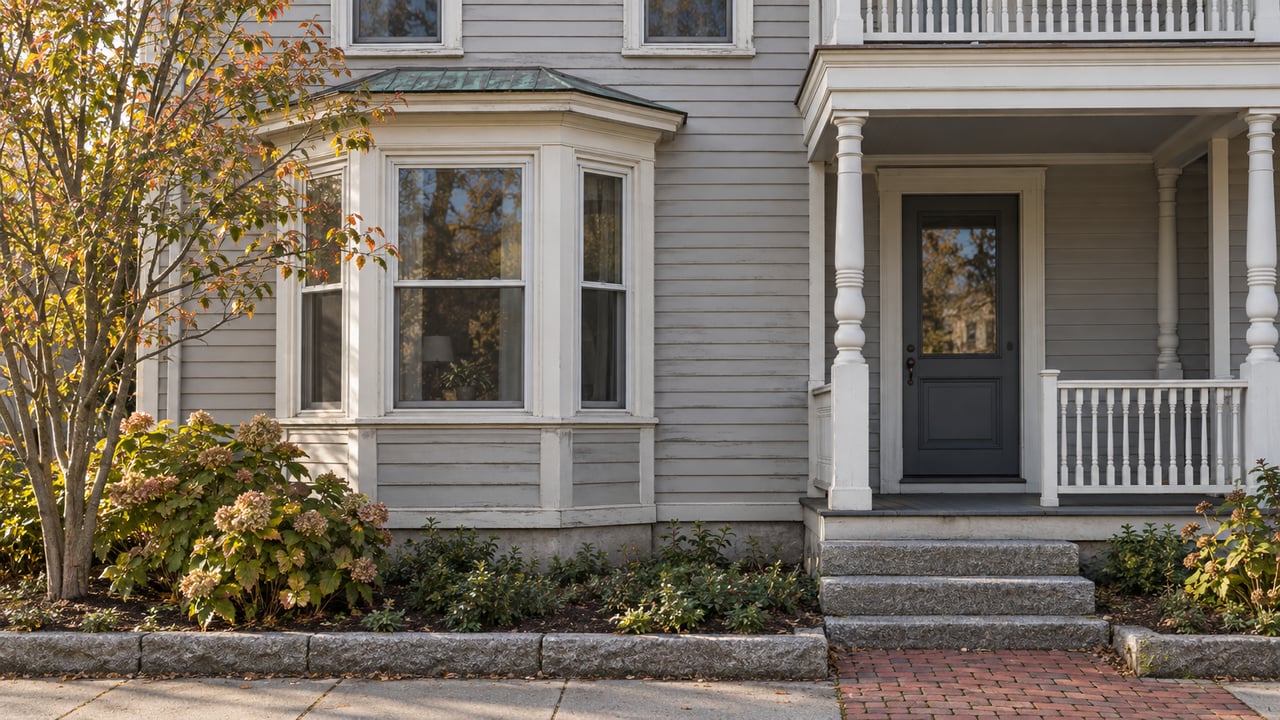
Providence Multi-Family Investor Property Tax: What Changes Your Costs
October 1, 2026
October 1, 2026
Providence's 2025 citywide revaluation pushed assessed values up across the board, with multi-family properties rising faster than any other residential category. Ward 1, which covers Fox Point, Wayland Square, College Hill, the Jewelry District and Downtown, posted some of the steepest increases in the city. That alone would be enough to change how an investor underwrites a Providence multi-family purchase this year.
Then, on July 1, 2026, the Rhode Island Division of Taxation says the state added a second mechanism on top of it. The state now taxes any non-owner-occupied residential property assessed above $1 million, a threshold that a growing number of Providence's larger or better-located multi-family buildings are close to crossing for the first time. The two changes did not happen in isolation. Together they mean occupancy status now decides more of your tax exposure on a Providence multi-family deal than it did twelve months ago, and the gap is sharpest in exactly the neighborhoods where prices are highest.
Providence's citywide revaluation, prepared by Vision Government Solutions and released in March 2025, showed average single-family values rising 33 percent, from $373,235 to $494,674. Multi-family properties, the report noted, saw the largest percentage increases of any residential category in the city. That percentage also determines whether a building lands above or below the $1 million assessed-value line that now triggers the state's new non-owner-occupied tax.
The city then had to decide how to distribute the resulting tax burden. Mayor Brett Smiley's original April 2025 budget proposal would have raised the average tax bill on an owner-occupied single-family home by 4 percent while owner-occupied duplexes and triple-deckers, homes to tens of thousands of Providence residents, would have jumped 16 percent. City Council President Rachel Miller pushed back, arguing the plan would hurt small landlords who live in one unit of their own building and pass costs to tenants in the others. The final agreement, reached in June 2025, flattened both groups to a 6 percent average increase instead.
"It evens out the share that people are paying in taxes," Miller told the Boston Globe when the revised budget was announced.
Providence taxes residential property in tiers based on unit count and occupancy, not on a single flat rate. Under the city's classification ordinance, Class 1A covers buildings with fewer than six units and can be split into separate owner-occupied and non-owner-occupied rates. Class 1B covers six to ten units. Class 1C covers anything larger. The distinction between owner-occupied and non-owner-occupied within Class 1A is where the June 2025 budget deal actually landed.
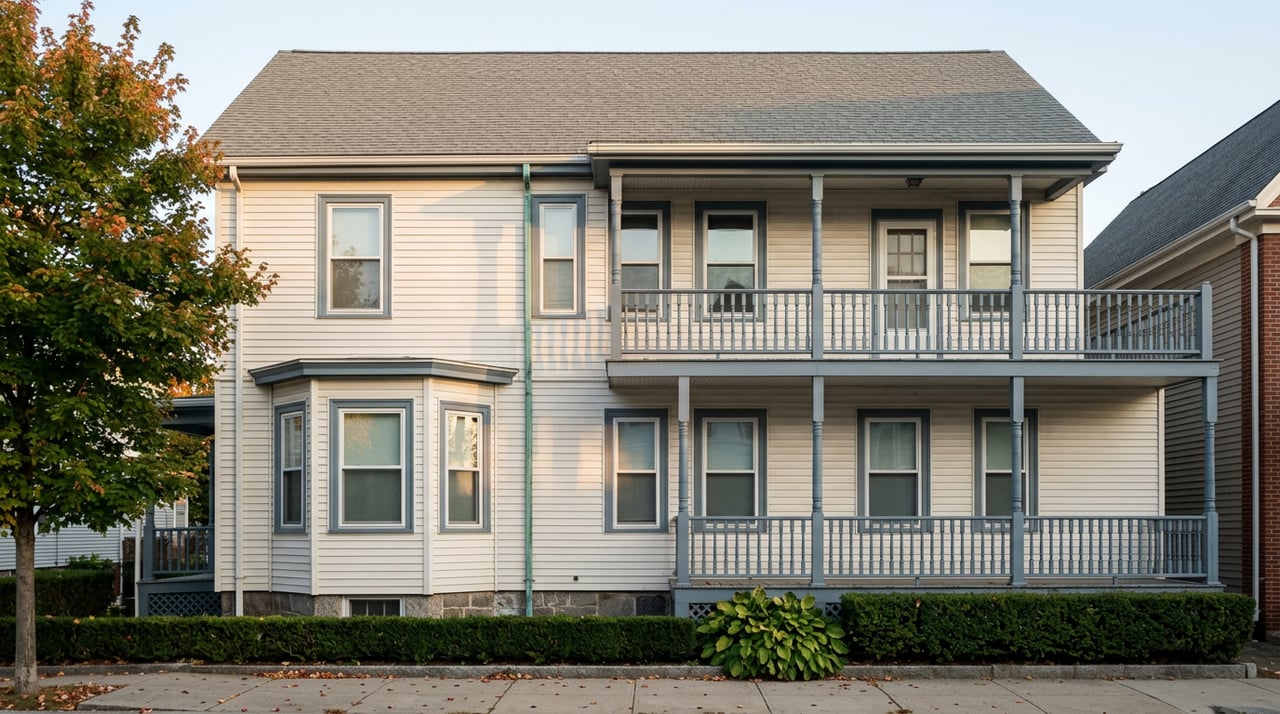
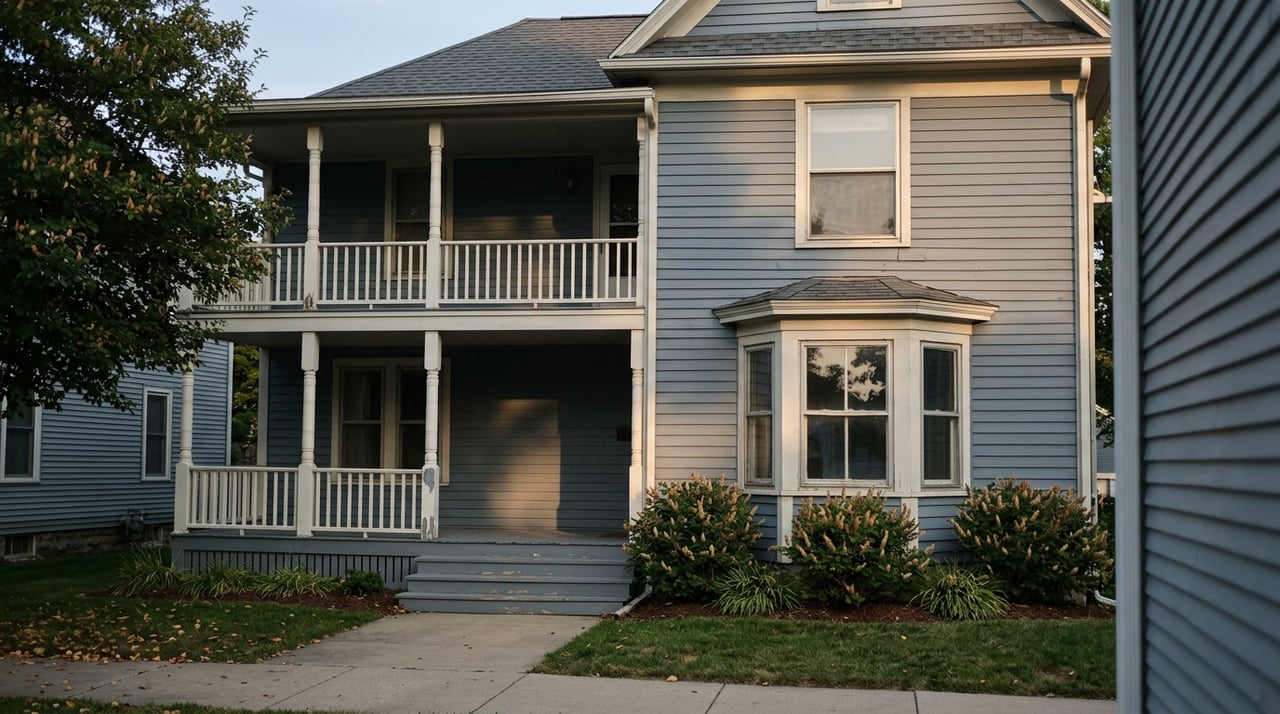
That deal protected the owner-occupied rate on small multi-family buildings. It did not touch the non-owner-occupied rate the same way. A triple-decker where the owner lives in one unit and rents the other two now carries a materially different tax trajectory than an identical building down the street owned entirely by an absentee investor, and that gap was set on purpose in this year's budget:
If you are buying with the intent to occupy one unit, you are underwriting against the protected rate. If you are buying as a pure investor, you are not.
Rhode Island does not otherwise collect property tax at the state level. The new Non-Owner Occupied Property Tax, which took effect July 1, 2026, is a narrow exception built specifically for this situation. It applies to residential properties assessed over $1 million that are not the owner's primary residence during the tax year, called the privilege year under the statute. A property is not subject to the tax as long as at least one unit is owner-occupied, according to the Division of Taxation's own guidance, which means the same occupancy decision that determines your city tax rate also determines whether this second, entirely separate state tax applies at all.
The mechanics matter for anyone mid-transaction. The Division uses a lagged assessment, valuing the property as of December 31, 2024 for the first privilege year, which runs July 1, 2025 through June 30, 2026, rather than the assessment in effect when the tax actually applies. If you buy a property that was already subject to the tax under the prior owner, the Rhode Island Division of Taxation's FAQ says the seller remains responsible for any tax due for the period before closing. The $1 million threshold itself is fixed for now and will start adjusting for inflation only for tax years beginning after July 1, 2027.
The Rhode Island Division of Taxation says revenue from the tax flows into an escrow account that funds Rhode Island's low-income housing tax credit program, administered by the Executive Office of Housing. The intent is to fund affordable housing production by taxing high-value properties that sit outside the owner-occupied market. The effect, for a Providence multi-family buyer, is a second checkpoint layered directly on top of the city's own occupancy-based rate structure.
Not every Providence neighborhood feels this the same way. The properties most exposed are the ones where the 2025 revaluation pushed assessed values closest to or past $1 million, concentrated in the same East Side pockets that already commanded the city's highest prices before any of this took effect: Fox Point, College Hill, Wayland Square, and parts of the Jewelry District and Downtown that fall under Ward 1.
A four or five-unit building in one of those areas that would have comfortably sat under $700,000 in assessed value a few years ago can now be within range of the $1 million line after a 33 to 50 percent revaluation jump. If that building is bought purely as an investment property with no owner-occupant, it now carries exposure to a tax that did not exist when the last comparable sale in that building's history closed. A similar building in a neighborhood where assessed values rose less sharply may sit well under the threshold and never trigger the state tax at all, regardless of who lives there.
This is not a reason to avoid the East Side. It is a reason to model occupancy status as its own variable in the underwriting, separate from unit count, rent roll, or purchase price.
Before you commit to a Providence multi-family purchase, especially one anywhere near the higher end of the current price range, a few things are worth confirming directly rather than assuming from the listing:
None of this replaces advice from a tax professional or the closing attorney handling the transaction, and the rules around exemptions and appeals have enough edge cases that it is worth confirming your specific situation directly with the Division of Taxation or the city assessor rather than relying on a general summary. But knowing which questions to ask before you write the offer is the difference between underwriting a deal accurately and finding out about a new tax line at the closing table.
Does the new state tax apply if I live in one unit of a multi-family and rent the others? No. The Division of Taxation's guidance states a property is not subject to the tax as long as one unit is owner-occupied, regardless of how many other units are rented out.
If I bought a Providence multi-family in 2026, am I responsible for tax from before my purchase? No. The seller remains responsible for any Non-Owner Occupied Property Tax due for the period of their ownership. The buyer's exposure begins with their own ownership period going forward.
Is the $1 million threshold going to change? Not immediately. It is fixed through the tax year beginning July 1, 2027, after which it will be indexed for inflation.
None of the shifts here make Providence a harder place to buy a multi-family. They make occupancy status a decision worth pricing into the offer, not an afterthought handled after closing. If you are comparing a specific building's assessed value, classification, and what it would actually cost to carry as an owner-occupant versus a pure investment, Luis Rodrigues can walk through the numbers on that particular property before you write anything up.
This article is general information, not legal, tax or financial advice. Consult a qualified professional about your situation.



Luis is here to help you throughout your entire home buying and selling process. Trying to do it all on your own can be burdensome. He will find you homes within your price range, help you find buyers, assist you with paperwork, and more.